From Hungary to America: The legacy of the 1956 Revolution, 70 years later
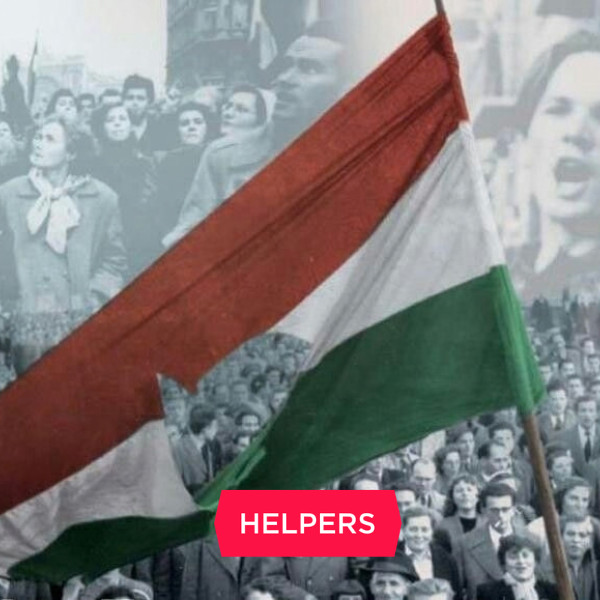
The 1956 Revolution of Hungary was a nationwide uprising against Soviet rule. It ended in bloodshed and years of retribution, and 200,000 people fled Hungary in its wake. Now October 23, the first day of the revolution, is a national holiday, which can be especially important to the descendants of those who left Hungary then.
The 1956 Revolution of Hungary was a nationwide uprising against Soviet rule. It ended in bloodshed and years of retribution, and 200,000 people fled Hungary in its wake. Now October 23, the first day of the revolution, is a national holiday, which can be especially important to the descendants of those who left Hungary then.
- About the 1956 Revolution in a nutshell
- 1956 and the Hungarian journey to America
- The legacy of the 1956 Hungarian Revolution
- Seventy years later: reconnecting with Hungary
- FAQ
About the 1956 Revolution in a nutshell
On October 23, 2026, Hungary marks the 70th anniversary of the Hungarian Revolution of 1956 – one of the defining moments in the country’s modern history. What began as a peaceful student demonstration in Budapest quickly became a nationwide uprising against Soviet domination and communist rule. Although the revolution lasted only a few weeks, its consequences shaped Hungary for decades and changed the lives of hundreds of thousands of people.
Seventy years later, the legacy of the revolution can still be felt far beyond Hungary. For many Hungarian-American families, the events of 1956 are not simply history: they are part of the story of how their families came to the United States.
1956 and the Hungarian journey to America
In the aftermath of the 1956 revolution, around 200,000 Hungarians fled their homeland. For many, the decision to leave had to be made quickly. People crossed Hungary’s western border, often with few possessions and no certainty about whether they would ever be able to return.
Most initially arrived in neighboring Austria, while others escaped through Yugoslavia. From refugee camps and temporary accommodation, they were eventually resettled in countries around the world.
The United States became one of their most important destinations. Tens of thousands of Hungarian refugees were welcomed into the United States following the revolution. They arrived as students, workers, professionals, parents, and children, and began rebuilding their lives thousands of miles from home. Over time, they became part of Hungarian-American communities across the country, carrying Hungarian traditions, food, language, family stories, and cultural identity into the next generation.
For many Americans with Hungarian ancestry today, this makes 1956 deeply personal. Perhaps a grandparent left Hungary after the revolution. Perhaps a great-grandparent helped preserve Hungarian traditions in their new home. Or perhaps, generations later, only a Hungarian surname, an old document, a photograph, or a family story remains. In these families, the history of the Hungarian Revolution also became part of American family history.
The legacy of the 1956 Hungarian Revolution
Although the revolution ended in military defeat, its significance never disappeared. For decades, 1956 remained a powerful symbol of resistance to Soviet rule and the desire for Hungarian independence. After the fall of communism, October 23 became a national holiday, commemorating both the beginning of the 1956 Revolution and the proclamation of the Hungarian Republic in 1989. Today, memorials, photographs, personal accounts, and places marked by the fighting preserve the memory of those extraordinary weeks.
But perhaps some of the most powerful reminders are found within families. They live in stories passed from grandparents to grandchildren, photographs carried across borders, Hungarian names preserved through generations, old documents stored in family collections, and communities established thousands of miles from Hungary.
Seventy years later: reconnecting with Hungary
Much can change in seventy years. The children and grandchildren – and, increasingly, great-grandchildren – of Hungarians who left their homeland have grown up across the United States and around the world. Yet for many, the connection to Hungary has never completely disappeared. Some begin exploring that connection by researching their family tree. Others search for Hungarian birth or marriage records, visit the towns their ancestors came from, learn the language, or discover the stories behind names and photographs that have been in their families for decades.
For some descendants, that journey eventually leads them to explore whether they may be eligible for Hungarian citizenship based on their ancestry. There is something particularly meaningful about this in 2026. Seventy years ago, thousands of Hungarians were forced to leave their country and build new lives abroad. Today, some of their descendants are looking in the opposite direction: rediscovering the country, culture, language, and history that their families once left behind.
Could your Hungarian family story lead you back to Hungary?
If your parents, grandparents, or great-grandparents left Hungary and you are now exploring your Hungarian roots, your family history may open more doors than you realize. Depending on your ancestry and family circumstances, you may be eligible for Hungarian citizenship, even if your family has lived abroad for generations.
At Helpers Hungary, we can help you understand your family history, assess your potential path to citizenship, and determine what documents may be needed to prove your Hungarian ancestry.
Ready to explore your Hungarian roots? Contact us to find out where your family story could lead next.
FREQUENTLY ASKED QUESTIONS
It is estimated that more than 200,000 people left Hungary in the wake of the Revolution, although around 11,000 returned by summer next year, accepting the amnesty offered. Currently, more than 1.4 million people just in the U.S. consider themselves Hungarian, and many of those are descendants of 1956 emigrants.
While our previous article on the topic offers a short overview, it is far from comprehensive. There are several thorough descriptions of the events – Wikipedia is always a good start when you are looking for sources. You can also ask your parents or grandparents, or if you are a member of a Hungarian community where you live, you can ask your other elders. There are also several movies about the revolution and its aftermath – you can find a short list here.
If you have at least one ancestor who came from Hungary, there is a high chance you are eligible for citizenship. We have a short online survey you can fill out – it is free of charge and takes only a few minutes. If it suggests that you are eligible, you can book a consultation with one of our experts to discover your options.


Contact
Get in touch today

Monday - Friday
9am - 5pm CET
Helpers Hungary Kft
Budapart Gate
Dombóvári út 27
Budapest 1117, Hungary
If you’re visiting us, please use entrance A and come to the 2nd floor.