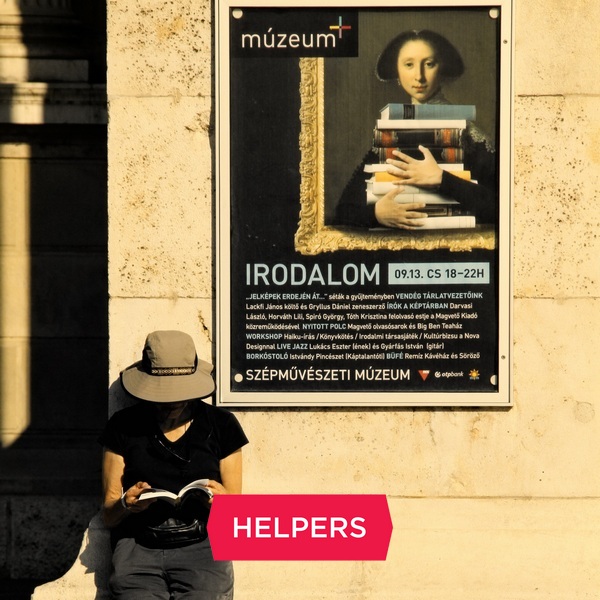
Hungarian literature you might already know
While Hungary is a small country, Hungarian literature is known around the world, with many works translated not only to English, but several other languages. There is a chance you have already come across some of these works. If not, this is a great time to check them out from the library!
While Hungary is a small country, Hungarian literature is known around the world, with many works translated not only to English, but several other languages. There is a chance you have already come across some of these works. If not, this is a great time to check them out from the library!
The Paul Street Boys (A Pál utcai fiúk, 1907) – Ferenc Molnár
Probably the most well-known Hungarian novel around the world, which tells the story of a fight between two groups of boys for a vacant lot, and through that, belonging, loyalty, and heroism. The book is part of the middle-school curriculum in Hungary, but is also taught in many other countries, such as Italy, Poland, and Brazil. It has at least 7 movie adaptations, and in 2016, it was turned into a musical, which is still running in Hungary.
The Door (Az ajtó, 1987) – Magda Szabó
The story of two women: a young writer and her housekeeper, and the door to the housekeeper’s home that is never opened to anyone. The story explores themes of class, power, and the complexities of human relationships. The book was translated to more than 30 languages and received international acclaim, while the 2012 movie adaptation was directed by renown director István Szabó.
Embers (A gyertyák csonkig égnek, 1942) – Sándor Márai
Two elderly men are having dinner after a forty-year pause in their friendship. As the night proceeds, the conversation starts to resemble a courtroom trial, where old grievances and old secrets come to light. Translated into more than 60 languages, it gained international renown, especially in Germany and Italy. The Hungarian movie adaptation was directed by István Szabó, but theatrical adaptations are also playing around the world.
Journey by Moonlight (Utas és holdvilág, 1937) – Antal Szerb
A young man is on his honeymoon with his lovely wife in Italy when he is hit by existential crisis. Kind of accidentally, but he goes on a new adventure to see if he can regain his youth and his dreams, and escape the shackles of adulthood. The novel explores themes of nostalgia, love, and the struggle between personal desires and societal expectations. It has been widely popular ever since its publication both in Hungary and worldwide.
Fatelessness (Sorstalanság, 1975) – Imre Kertész
A 14-year-old Jewish boy is plucked from Budapest and taken to various concentration camps. Throughout the ordeal, he tries to make sense of the events, which is impossible. He remains an outsider, and that does not change even when he returns home. Beside giving a rigorous description of life in concentration camps, the novel tackles themes of estrangement and freedom. In 2002, Kertész became the first Hungarian writer who received the Nobel Prize for Literature. In 2005, a movie adaptation was made, directed by Lajos Koltai, internationally celebrated cinematographer and director.
Satantango (Sátántangó, 1985) – László Krasznahorkai
In this postmodernist novel narrated from several perspectives, a con-man arrives to a run-down village posing as a savior, convincing people to give him all the little money they have and to move to another abandoned village. Chapters resemble a tango, as they follow six steps forward and six steps back. Every chapter is one long paragraph without a break. The novel tackles the lies people tell themselves to keep them going, betrayal, and the longing for something that is bigger than us. The 1994 movie adaptation with director Béla Tarr is maybe the longest Hungarian movie with its 7.5-hour runtime. Krasznahorkai received the Nobel Prize for Literature for his oeuvre in 2025.
The Man with the Golden Touch (Az arany ember, 1872) – Mór Jókai
The story of a “self made man”, who gains wealth and power thanks to his wits, his luck, and his Midas touch. As the story proceeds, a stark contrast unfolds between what is considered good and respectable by society, and what are the values that make life worth living. This is Jókai’s most popular and internationally most well-known novel, with various adaptations for stage and screen.
Do you have a favorite?
Of course, there are many more pieces of Hungarian literature that are well known outside of Hungary. Do you know any? Do you have a favorite? Let us know in a Facebook comment.
Are you interested in life in Hungary? If you have Hungarian relatives, there is a chance you might be eligible for Hungarian citizenship by descent. Take our free online survey to find out. It takes just a few minutes, and you will immediately know if you are eligible for a Hungarian passport.
Of course, you can also come to Hungary if you are not a citizen. Our team manages hundreds of residency as well as citizenship applications every year, and we would be happy to help you map your options and accompany you on your journey to a new life in Hungary.
Did you like this article? Follow us on Facebook to learn more about living, working, and doing business in Hungary, or sign up for our newsletter.

Contact
Get in touch today

Monday - Friday
9am - 5pm CET
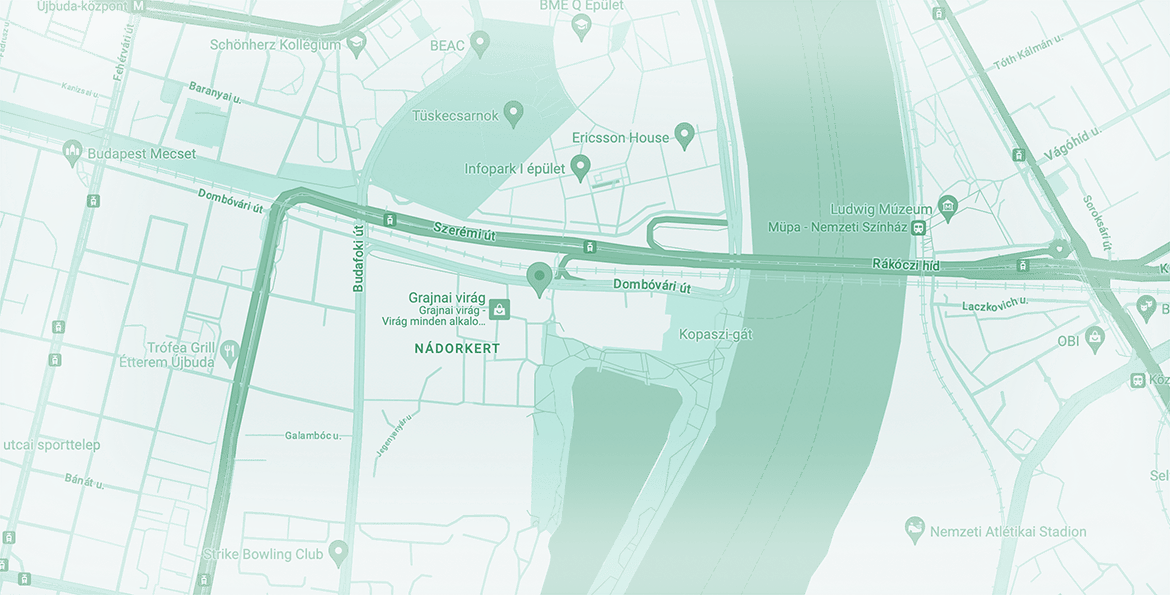
Helpers Hungary Kft
Budapart Gate
Dombóvári út 27
Budapest 1117, Hungary
If you’re visiting us, please use entrance A and come to the 2nd floor.