What is a Hungarikum?
Hungarikum is an umbrella term for things that are distinctly Hungarian and that are worth recognition and protection – things we can be proud of. It is also a legal category, since it depends on the Hungarikum Committee to decide whether a specific food, plant, animal, custom, or invention is allowed to be called a Hungarikum.
Hungarikum is an umbrella term for things that are distinctly Hungarian and that are worth recognition and protection – things we can be proud of. It is also a legal category, since it depends on the Hungarikum Committee to decide whether a specific food, plant, animal, custom, or invention is allowed to be called a Hungarikum.
Who decides what is a Hungarikum?
The concept of Hungarikum started from a wish to recognize, record, and categorize cultural elements that are distinct to Hungary so they can be protected, promoted, and handed down to the generations to come. For that purpose, the Hungarikum Act was created in 2012, which defines how something can get recognized as a Hungarikum.
If something is considered to have cultural value, it can be recommended for inclusion in the Repository of Values – first on the local level, then on the county level. If something cannot be tied to a specific town or region, it can be recommended directly to the relevant ministry. Once something is added to the Repository of Values, it may be considered by the Hungarikum Committee for recognition.
Hungarikum categories
Currently, there are 100 Hungarikums listed in the collection of Hungarikums, organized into 8 categories. You can learn more about them on the official website of Hungarikums, but below you can see a selection of the most well-known or interesting ones.
1. Agriculture and food industry
A wide variety of plants, animals, and food (mostly Hungary-specific ingredients).
- Pálinka: a type of distilled spirit that can be made from a variety of ingredients. The saying goes that if something can ferment, it can be made into Pálinka.
- Egri Bikavér, or “Bull’s Blood” red wine from Eger
- Tokaji aszú, the wine of kings and the king of wines: a sweet wine from the Tokaj wine region, prepared by a special process when they allow the Noble Rot to affect the grapes used
- Chimney cakes
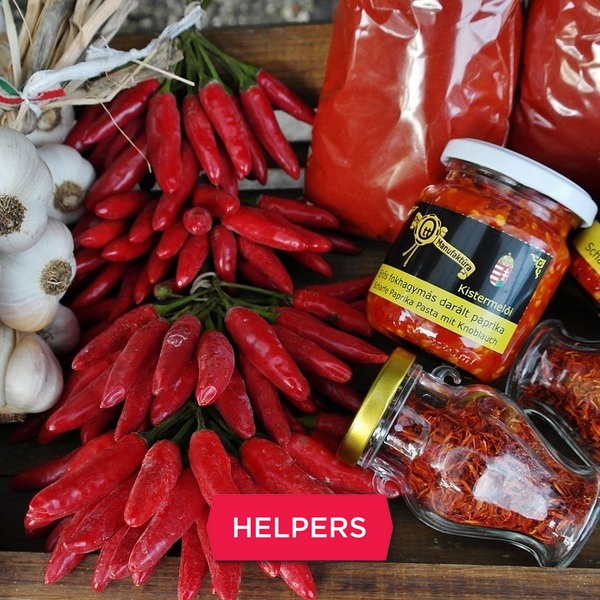
- Paprika: specific Hungarian varieties of red pepper that can be sweet or hot; they are usually dried and ground, and then used as a spice.
- Spritzer: a “cocktail” of soda-water and wine (white or rosé)
- Hungarian hunting and shepherd dogs, including Komondor, Kuvasz, Puli, Pumi, Mudi, Hungarian Vizsla, Hungarian Wirehaired Vizsla, Transylvanian Hound, and Hungarian Agár
- Hungarian grey cattle
2. Built environment
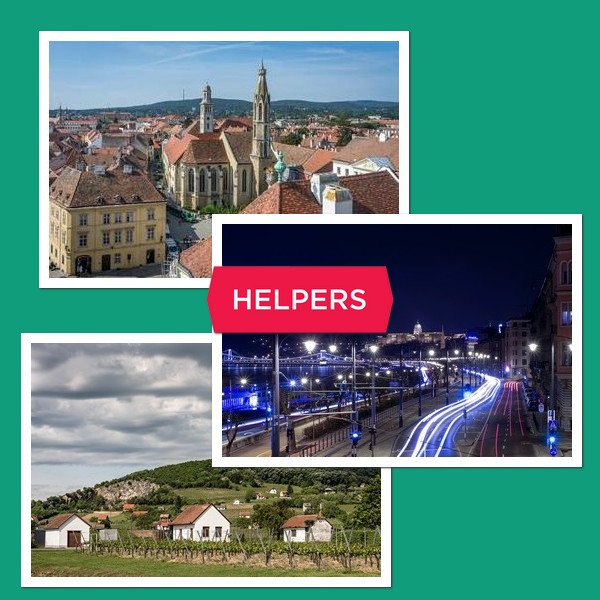
This category has just one element, the village of Torockó, located in Transylvania, current Romania. It is the oldest countryside architectural complex in the Carpathian Basin that has a uniform style, as the houses of the village all date back to the late 19th century.
3. Cultural heritage
Cultural heritage comprises of various practices and customs, art, as well as regions that are valued highly.
- 100 member Budapest Gypsy Symphony Orchestra
- Falconry and horseback archery
- The Anna Ball of Balatonfüred: a summer dance and a meeting place for artists, politicians, and public figures
- The “Mohácsi busójárás”, a masked end-of-winter tradition
- Various Budapest sights, such as the banks of the Danube, Buda Castle, and Andrássy Avenue
- Protected landscapes, like those of Lake Fertő, Hortobágy, Hollókő, or the Tokaj wine region
- Porcelain, lace, embroidery, and other folk art from various regions
- The animated series of Hungarian Folk Tales
- Hungarian folk songs and instruments such as the dulcimer (“cimbalom”: a table with strings hit by two soft hammers) or the “tárogató” (a woodwind instrument similar to an oboe)
- The Kodály method for teaching music to children
4. Health and lifestyle
Achievements in medicine and practices that let people live a healthier life:
- Béres drops: a food supplement to prevent disease and support recovery
- Hévíz: the largest hot water lake in Europe with medicinal effects
- The Hungarian district nurse service: a healthcare service focusing on new mothers and small children, providing education and support
5. Industrial and technical solutions
Hungarian inventions with a much wider impact.
- The “Kocsi” carriage: carriages made in the Hungarian village of Kocs from the 15th century became widely popular throughout Europe – so much so that even the English word “coach” is initially derived from it
- The oeuvre of János Neumann, especially in physics as well as information and computer technology
- KÜRT data recovery: an ingenious method to recover data from “destroyed” magnetic data storage
- Zsolnay porcelain: the factory is known not only from its artful objects, but also its innovations in ceramics, such as discovering the eosin process that gives articles an iridescent glaze
6. Natural environment
Natural formations and phenomena that are unique to Hungary.
- The caves of Aggtelek and the surrounding karst: the spectacular caves with unique dripstone formations also have biological, paleontological and archaeological significance
- The hive-stones and the stone culture of Bükkalja
- The swarming of the long-tailed (but very short-lived) mayfly
7. Sport
Unique styles and achievements in various sports.
- Classical Hungarian saber fencing: a special Hungarian type of fencing
- Teqball: a football-based sport played on a specially-curved table; invented in Hungary in 2012, it already has federations in 150 countries around the world.
- The oeuvre of Ferenc Puskás, one of the best football players of all times
8. Tourism and hospitality
While the category mostly includes food, the focus is in fact on the experience (and as such, other attractions might be added later).
- Goulash soup
- The fish soups of Baja and the Tisza
- The mutton stew of Karcag
- Lángos: a fried flatbread, often topped with garlic, sour cream, and cheese – or other ingredients
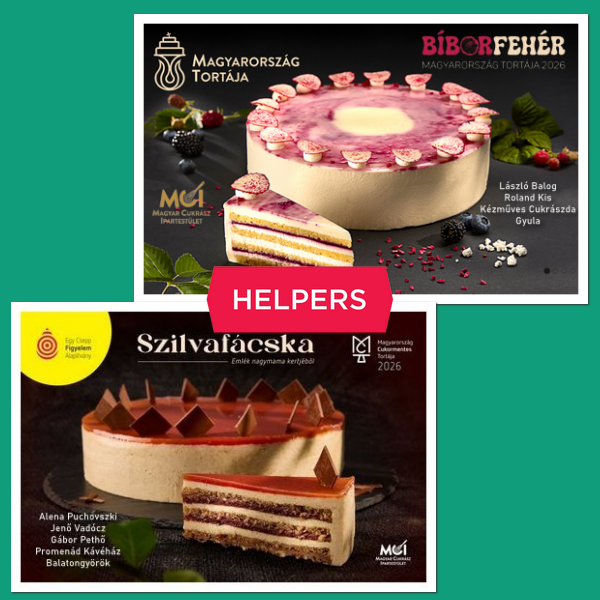
- Dobos cake: a sponge cake with many layers of chocolate filling and a hard caramel topping, named after its creator, József C. Dobos
- Pozsonyi kifli or Pressburger Kipfel: a sweet crescent-shaped pastry filled with a paste of walnuts or poppy seeds
- The heritage of the Gundel family: their restaurant in the City Park of Budapest composed and popularized various innovative dishes since the late 19th century, many of which have become staple dishes of Hungarian cuisine, such as the Somló Style Sponge Cake or the Újházi Chicken Soup.
A crash course in Hungarian culture
Hungarikums include concepts and things that are well-known and appreciated by Hungarians. Whether you are interested in food, music, sights, or inventions, taking a deep dive into Hungarikums lets you get closer to Hungarian culture – and if you have Hungarian ancestors, your Hungarian heritage.
Additionally, if you have Hungarian relatives, you might be eligible for Hungarian citizenship. A Hungarian passport allows visa-free access to 180+ countries and preferential travel options in the EU, so you can really say it opens the world. This is something that is available to you too if you apply for Hungarian citizenship based on ancestry. Check out our free online test to see if you are eligible.
Helpers Hungary has 20+ years of experience supporting foreigners in Hungary, and a team dedicated to providing assistance with citizenship applications. Whether you need help in getting started or throughout the entire application process, our expert team will be happy to answer your questions.
FREQUENTLY ASKED QUESTIONS
Hungarikums are things that are distinctly Hungarian, or things Hungary can be proud of. In 2012, a committee was created to record and categorize the treasures of Hungarian history and culture, and they have been diligently adding new items to the list ever since.
Hungarikum is a trademark that can be used on products listed in the collection of Hungarikums. Its use is free of charge, but providers need to submit an application to the Ministry of Agriculture before they can display the trademark. It is important to note that the Hungarikum trademark does not certify for the quality of marked products; its main purpose is to indicate to visitors that they are about to encounter an authentic Hungarian experience.
In Hungarian, you write it with a K. In English, both spellings are common.
Hungarikums are not part of the Hungarian citizenship exam as such – and if you base your citizenship application on ancestry, you do not need an exam anyway. Getting familiar with Hungarikums, however, can be a good starting point if you want to learn more about Hungarian culture and you prefer learning tidbits to reading longer texts.
Want to see more articles like this? Sign up for our monthly newsletter and get to know Hungary.

Contact
Get in touch today

Monday - Friday
9am - 5pm CET
Helpers Hungary Kft
Budapart Gate
Dombóvári út 27
Budapest 1117, Hungary
If you’re visiting us, please use entrance A and come to the 2nd floor.